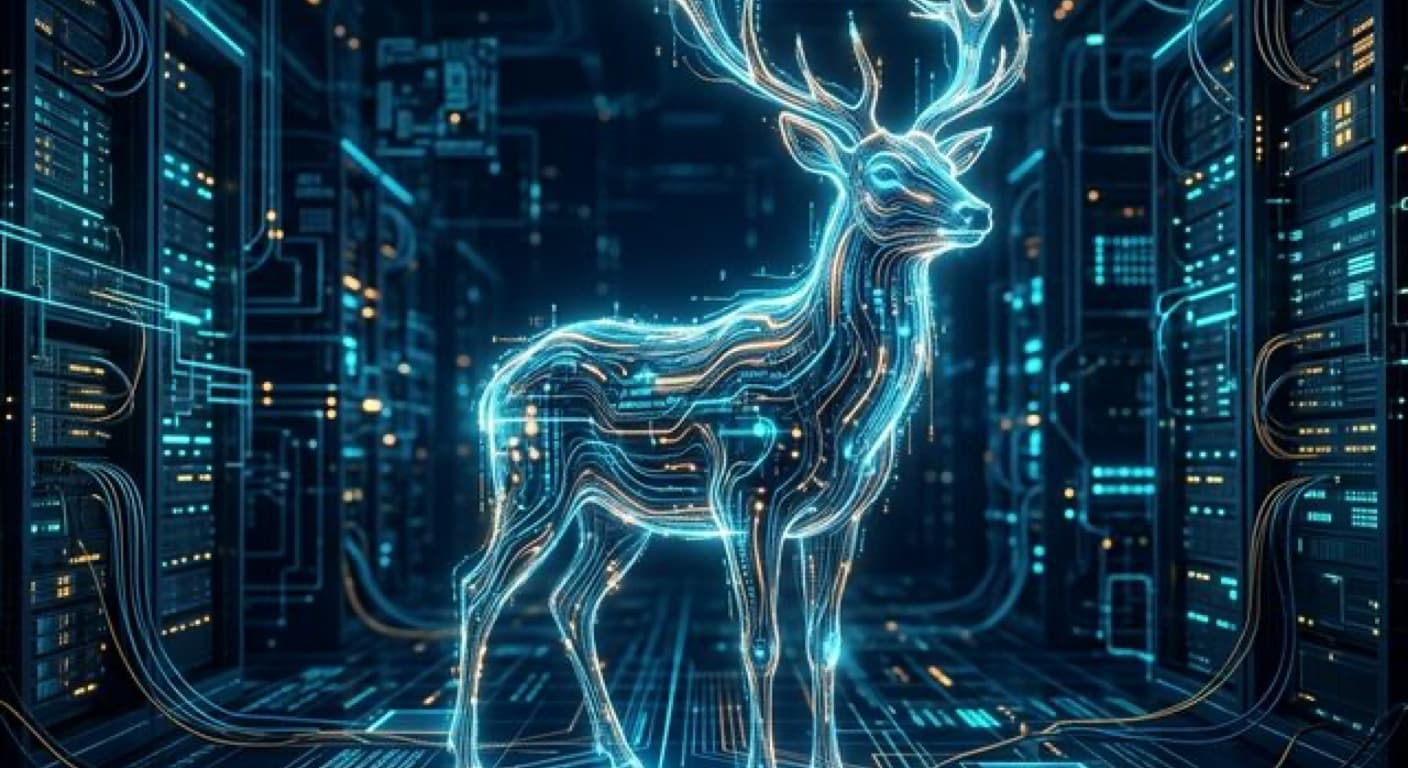
The development team at ByteDance (creators of TikTok) has released DeerFlow 2.0, an open source harness designed to orchestrate intelligent "SuperAgents". While traditional AI agents struggle with lengthy tasks, DeerFlow proposes a sub-agent architecture capable of processing workflows spanning minutes to hours, from deep research to actual deployment.
The Sub-Agent Architecture
The main bottleneck in many AI workflows is context degradation during long executions. DeerFlow solves this through a "divide and conquer" approach: a primary lead agent dynamically spawns sub-agents. Each runs in an isolated context, with specific tools and termination conditions, working in parallel on different facets of the problem. It's the real shift from a tool-augmented chatbot to an autonomous execution environment.
Docker Sandbox and Integrated File System
DeerFlow doesn't just pretend to take action; it actually executes. Every task runs inside an isolated Docker container equipped with a real file system (/workspace, /uploads, /outputs).
Agents can write files, execute bash commands, and make architectural changes safely, with zero contamination between sessions. Furthermore, thanks to its "Long-Term Memory" system, DeerFlow maintains a local history of user preferences, tech stacks, and coding styles across multiple sessions.
Skills, Tools, and Integration
Extensibility is the core pillar of the framework. "Skills" are defined in a simple Markdown format (SKILL.md) that drives workflows, while the Python foundation (57% of the repo is Python) maximizes infrastructural power. Highly notable is the seamless integration with Claude Code via terminal, blurring the lines between local development and distributed agent systems.
FAQ
Which LLMs are recommended for DeerFlow? The creators suggest models with massive context windows (100k+ tokens) and strong reasoning capabilities (e.g., Doubao-Seed-2.0, DeepSeek v3.2, or Kimi 2.5).
What is the purpose of Long-Term Memory? It allows the agent to remember your coding style, the frameworks you favor, and recurring architectural choices across different sessions, bypassing typical chatbot amnesia.
Can DeerFlow read local files?
Yes, it provides both local file operations and a containerized setup (uploads/) where you can pass anything from PDF documents to entire codebases.
Need a consultation?
I help companies and startups build software, automate workflows, and integrate AI. Let's talk.
Get in touch